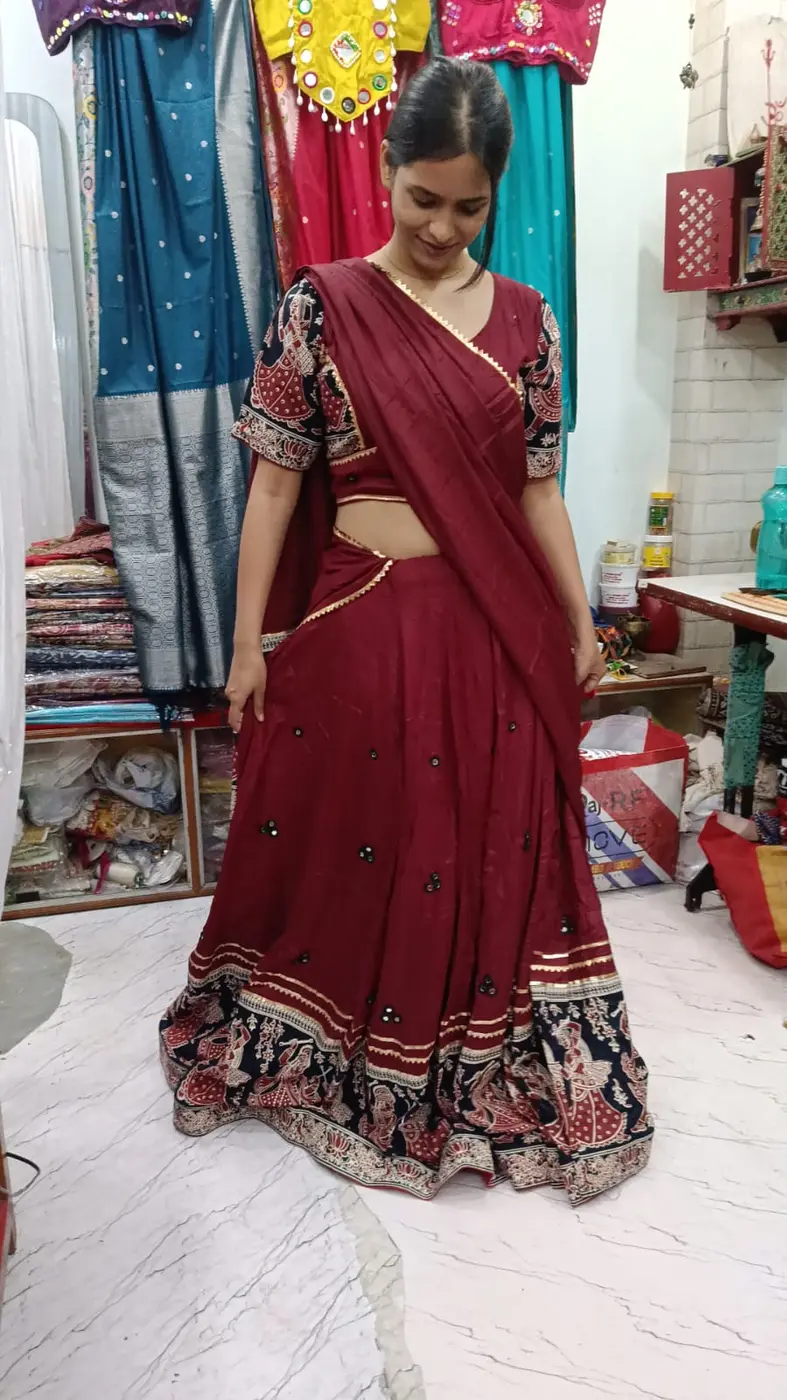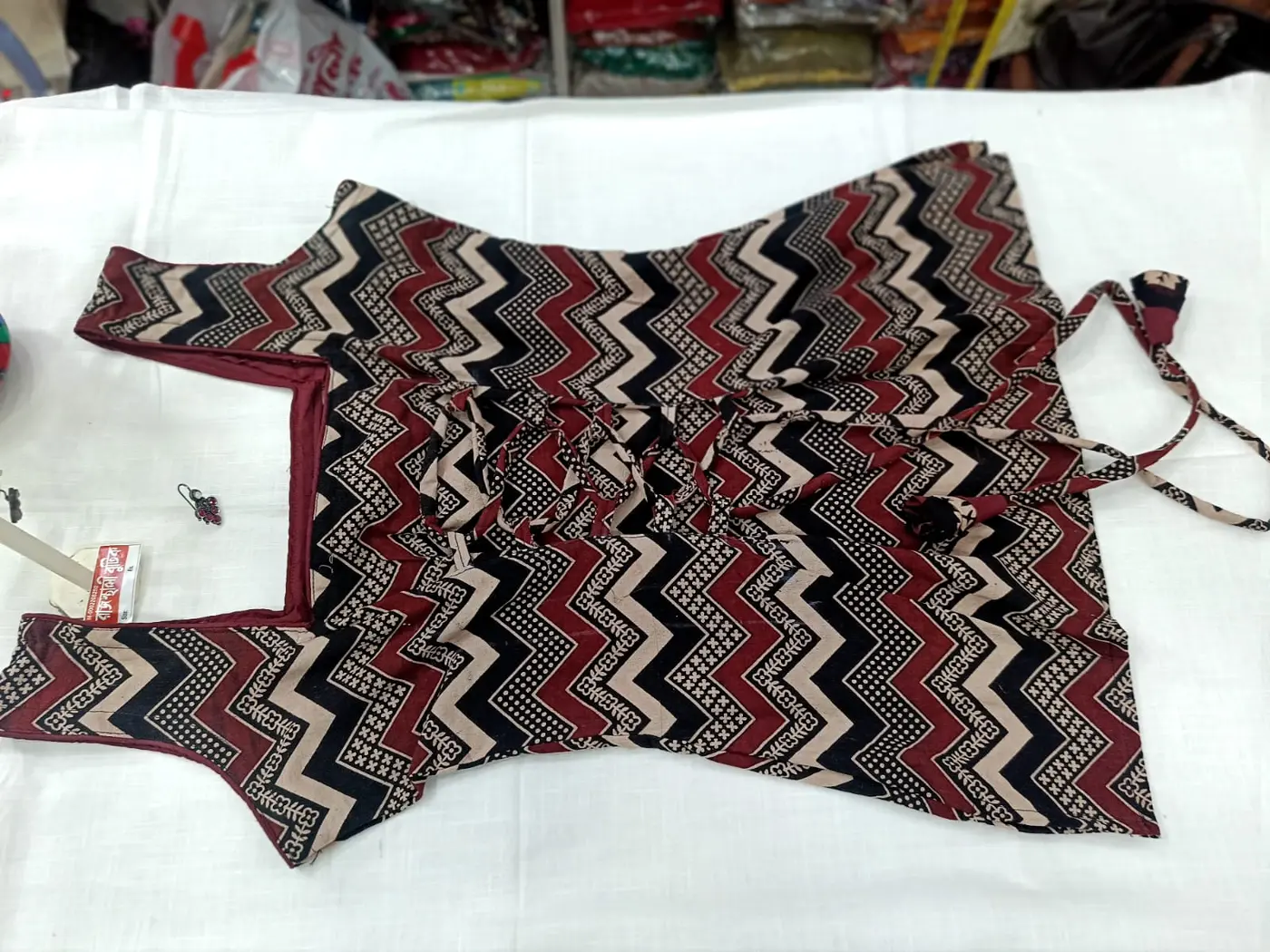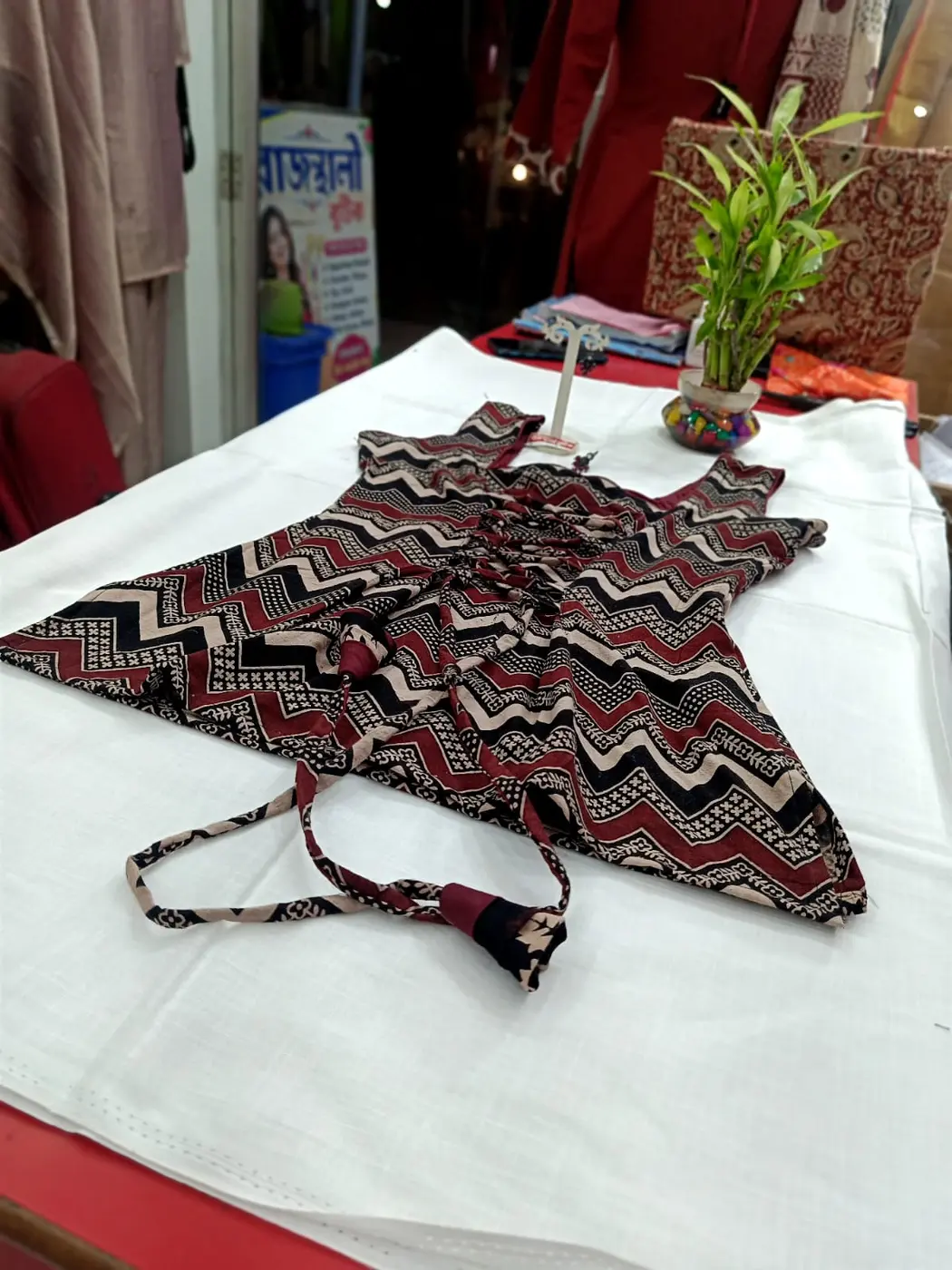
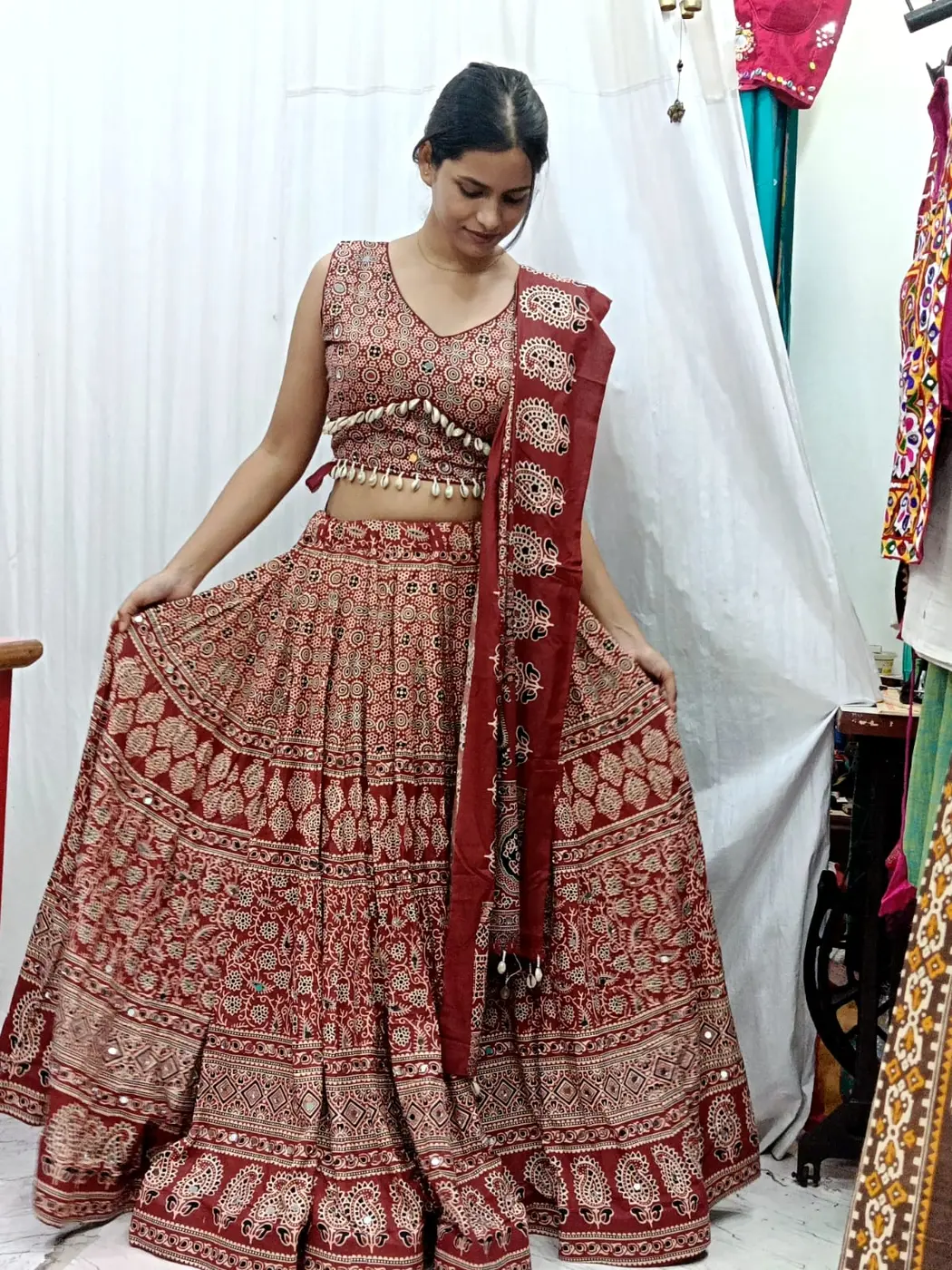
Ajrakh is a traditional hand-block printing craft practised in Kutch (Gujarat), Barmer (Rajasthan) and Sindh. The name is often linked to the phrase “aaj rakh” — “keep it today” — a nod to the many days the cloth is kept between each stage.
How ajrakh is made
Real ajrakh is a long, patient process. The cotton is washed and treated, printed with carved wooden blocks using a resist paste, dyed, washed in the river, dried in the sun, and printed again. A single piece can go through more than a dozen steps over two to three weeks.
The ajrakh colour palette
- Madder red — from the roots of the madder plant
- Indigo blue — from natural indigo
- Black — from iron and jaggery fermentation
- Natural off-white — the resist-protected areas
Common motifs
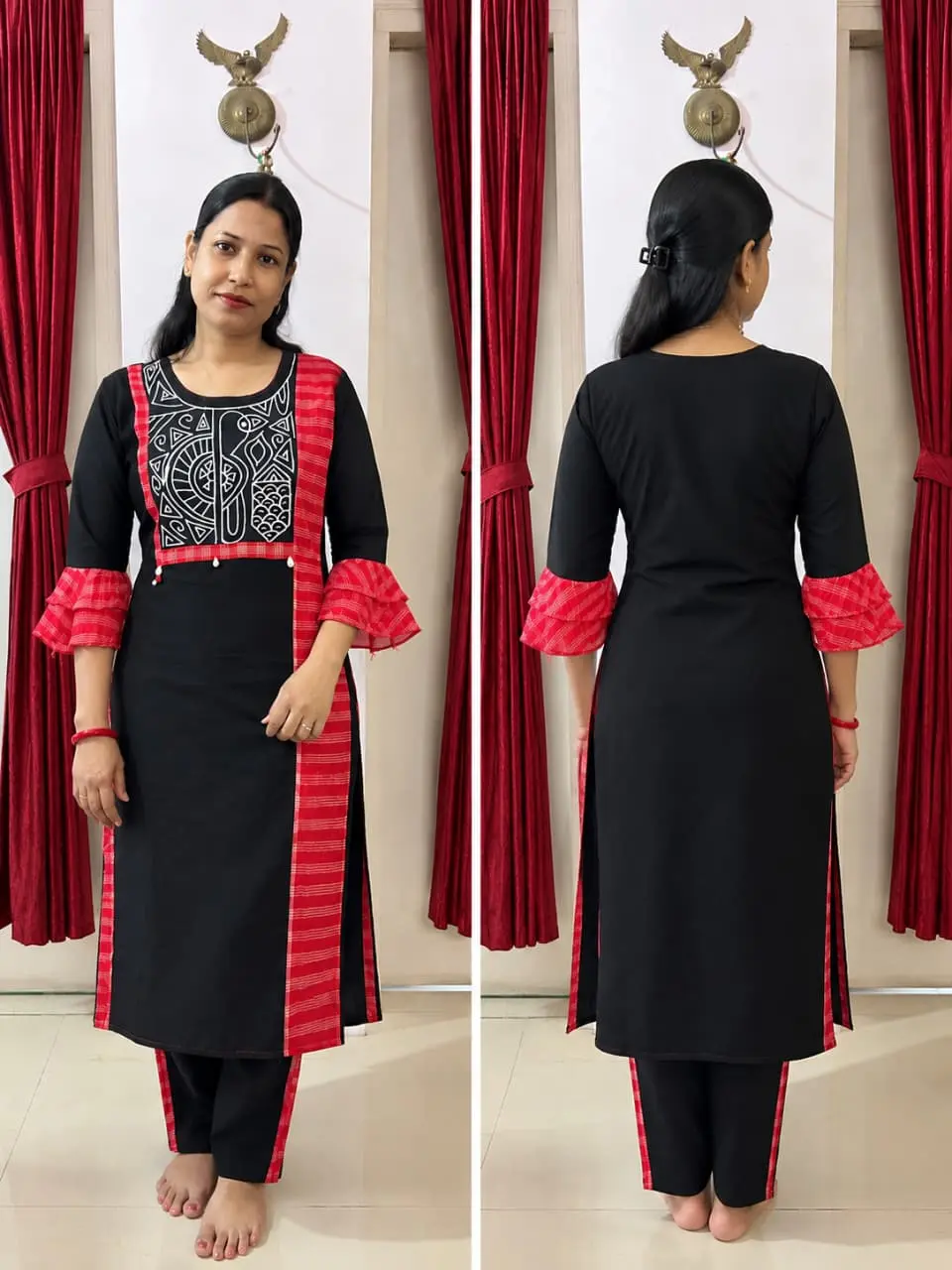
Expect symmetrical stars, jaali (lattice) patterns, flowers, paisleys and, in modern pieces, playful birds, fish and animals — like the ones on our kids’ ajrakh tops.
How to spot real hand-block ajrakh
- Look for tiny alignment gaps where one block meets the next — machine prints are perfectly even.
- The print shows through clearly on the reverse side.
- Colours are deep but slightly earthy, not neon.
- A little colour may bleed in the first wash; that is normal for natural dyes.
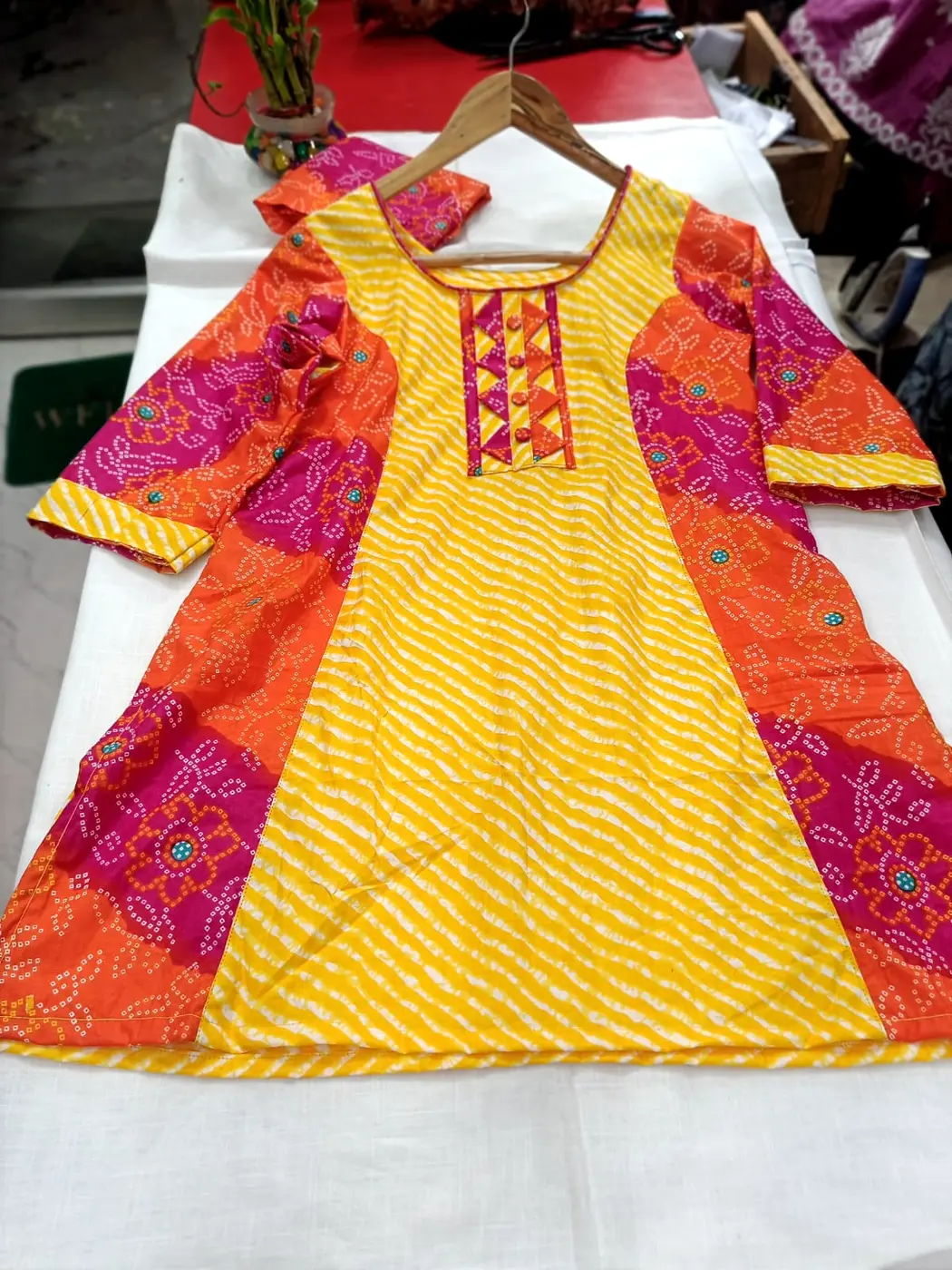
Browse our ajrakh lehengas and ajrakh kurtis, or visit Rajasthali Boutique in Berhampore to feel the fabric yourself.